How to Choose the Best PET Yarn Supplier in 2026?
Choosing the best pet yarn supplier in 2026 requires more than comparing quotations. A low price can hide inconsistent denier, weak tenacity, or unstable delivery. In practical sourcing, a yarn cone may look uniform while behaving differently during knitting or weaving. Small differences matter. They can cause broken ends, uneven dyeing, and costly machine stoppages. Buyers should define fiber type, recycled content, filament count, luster, twist, strength, elongation, and target application before contacting suppliers. Clear specifications make meaningful comparisons possible.
A reliable supplier should provide recent test reports, batch traceability, safety documentation, and samples from normal production. Ask how quality is controlled from polymer preparation to winding. Factory visits, independent laboratory checks, and pilot runs add useful evidence. Certifications can support credibility, but certificates alone do not prove daily consistency. Check production capacity, minimum order quantities, lead times, packaging, communication, and complaint handling. An experienced supplier explains limitations instead of promising everything. That honesty is valuable. Still, buyers can make wrong judgments after one successful sample. Recheck performance across colors, lots, and seasonal orders. Compare actual results, not polished presentations. The strongest partnership balances technical expertise, transparent records, dependable service, and realistic commercial terms. This guide examines these criteria, helping manufacturers select pet yarn with fewer surprises and stronger long-term confidence.
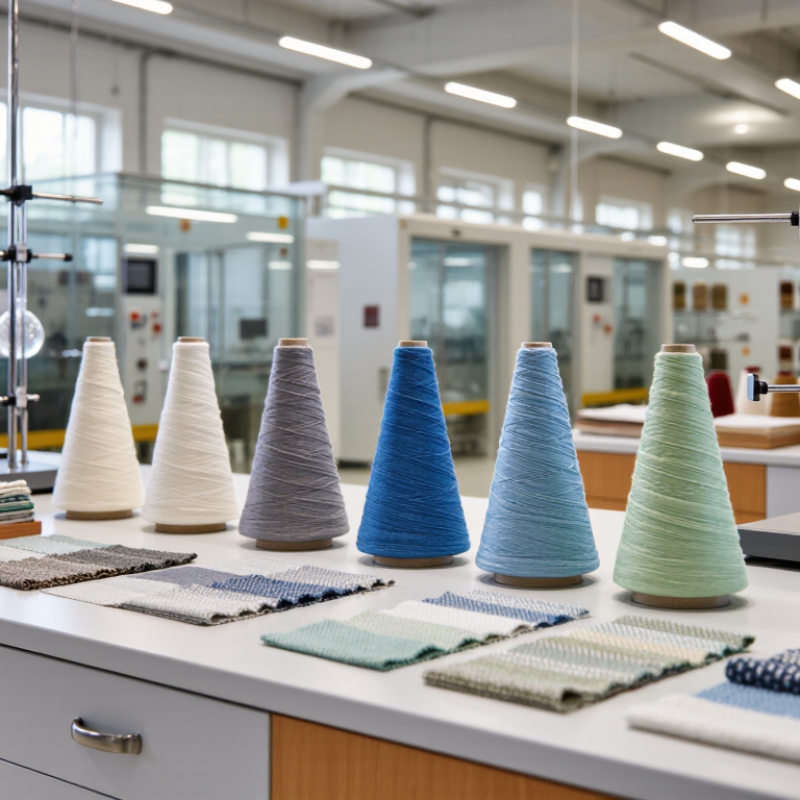
Define PET Yarn Requirements: Denier, Tenacity, Elongation, and End Use
When comparing PET yarn suppliers in 2026, begin with a precise requirement sheet, not a broad product request. Define denier according to fabric weight, coverage, and machine performance. A finer yarn may create a smoother surface, while a heavier yarn can improve strength and abrasion resistance. Small differences matter.
Specify tenacity in cN/dtex or another consistent unit. Then state the minimum acceptable value, testing method, and sampling condition. Elongation also needs a clear range, because excessive stretch can distort fabric dimensions. Too little elongation may cause breakage during weaving or knitting. I have learned that supplier data can look impressive until laboratory results reveal inconsistent readings. Measure it twice.
End use should guide every number. Automotive interiors may require strong, stable yarn with controlled shrinkage. Sportswear often needs softer handling and suitable recovery. Industrial fabrics may prioritize high tenacity over surface softness. Include color, luster, twist, heat-setting needs, package size, and production volume. Ask for traceable test reports and representative samples, then compare results under the same conditions. A sample that performs well in a small trial may behave differently during continuous production. That is easy to overlook. Discuss tolerance limits openly, and request written confirmation before approving bulk orders. A dependable supplier should explain variation honestly, not hide behind a single average value.
Verify Supplier Quality Systems Against ISO 9001, ISO 2062, and ASTM D2256
Choosing a PET yarn supplier in 2026 requires more than comparing price sheets. Textile Exchange’s Materials Market Report 2024 estimates that polyester represented 57% of global fiber production in 2023. That scale increases the risk of inconsistent feedstock, recycled content, and process control. A supplier should provide a current ISO 9001 certificate, including its exact manufacturing scope and site address. Verify the certificate with the issuing body. A logo on a PDF is not evidence.
Request recent ISO 2062 test records for yarn breaking force and elongation. Then compare them with ASTM D2256 results, which use a single-strand tensile method. The methods are related, but their conditioning, gauge length, and calculation details may differ. Do not compare numbers blindly. Ask for test temperature, humidity, sample count, twist level, and instrument calibration dates. ISO’s 2022 Survey reported more than 1.2 million ISO 9001 certificates worldwide, yet certification alone cannot prove every production lot is stable. That is the uncomfortable part.
During an audit, inspect package labels, lot traceability, moisture controls, and retained samples. Pull samples from different cartons, not only the supplier’s prepared box. Review complaint records and corrective-action closure times. A supplier that admits one failed lot and explains the fix may be more reliable than one showing perfect charts. My own caution: a single laboratory report is only a snapshot. Require repeat testing across several lots before approving long-term PET yarn supply.
Compare Virgin and rPET Options Using GRS, RCS, and Recycled-Content Data
Choosing the best PET yarn supplier requires more than comparing price and delivery time. Ask how each supplier controls raw materials, production, testing, and documentation. Virgin PET usually provides stable strength, color, and denier. rPET can reduce dependence on new plastic feedstock, but quality may vary between recycled batches. That matters in weaving.
Request a current GRS or RCS certificate, scope document, and transaction certificate for every relevant shipment. GRS covers recycled content, chain of custody, processing controls, and broader social and environmental requirements. RCS mainly verifies recycled material content and traceability. Do not treat either logo as complete proof. Check the certified facility, product scope, material percentage, and certificate validity. Certification alone does not guarantee identical performance in every lot.
Compare recycled-content data beside technical test results. For virgin yarn, record polymer source, intrinsic viscosity, tenacity, elongation, and moisture levels. For rPET, confirm the post-consumer or pre-consumer share and calculate the actual recycled percentage. Test denier, tensile strength, color consistency, and shrinkage before approving volume orders. A spreadsheet can still mislead. Some suppliers report averages, not batch-level results. I have learned to request three recent batches, not one polished sample. If the data conflicts, pause and ask why. The best supplier explains limitations clearly and provides corrective actions when results fall short.
How to Choose the Best PET Yarn Supplier in 2026?
Compare virgin and recycled PET yarn options using recognized recycled-content thresholds from the Recycled Claim Standard (RCS) and Global Recycled Standard (GRS).
Virgin PET contains no recycled material. RCS certification applies to products containing at least 5% recycled content, while GRS certification requires at least 20%. A recycled product generally needs at least 50% recycled content to qualify for GRS product labeling. When selecting a supplier, verify the certificate scope, chain-of-custody documentation, recycled-content percentage, and test records for the specific yarn.
Evaluate Capacity, MOQ, Lead Times, and 2026 Cost-per-Kilogram Offers
How to Choose the Best PET Yarn Supplier in 2026?
Supplier selection should begin with verified capacity, not a polished sales presentation. Ask for monthly output, machine types, utilization rates, and recent production records. A factory may promise 500 tonnes monthly but operate near full capacity. That can delay your order during peak seasons. Request a realistic allocation for your planned volume. I have found production schedules more useful than capacity claims alone.
MOQ affects both price and inventory risk. A low MOQ may suit product testing, while larger orders usually reduce the cost per kilogram. Check whether the quoted MOQ applies per color, specification, or shipment. Lead times also need precise wording. Confirm sample approval, production days, inspection time, and shipping arrangements separately. “Fast delivery” means little without dates. Build a small buffer.
For 2026 cost-per-kilogram offers, compare more than the headline number. Review raw material grade, yarn denier, strength, elongation, packaging, freight, and payment terms. Ask whether prices remain valid for 15, 30, or 60 days. Energy and recycled-feedstock costs can change quickly. My first comparison sheet ignored inspection fees, which made the cheapest offer misleading. Use a landed-cost calculation and request a written breakdown. Test the yarn before committing to a long contract. A supplier’s response to technical questions often reveals more than its catalog.
How to Choose the Best PET Yarn Supplier in 2026? - Evaluate Capacity, MOQ, Lead Times, and 2026 Cost-per-Kilogram Offers
Indicative 2026 comparison framework for standard 100% polyester DTY yarn, 150D/48F, semi-dull, virgin PET, quoted on an FOB Asian-port basis. Use the ranges for supplier screening and request a written quotation before purchasing.
| Anonymous Supplier Profile |
Estimated Monthly PET Yarn Capacity |
Typical MOQ |
Standard Production Lead Time |
2026 Indicative Offer
(USD/kg) |
Capacity Suitability |
Key Evaluation Point |
| Profile A — Large Integrated Producer |
5,000–12,000 metric tons |
3,000–5,000 kg per color or specification |
25–40 days after order confirmation |
$1.25–$1.55 |
High-volume programs |
Strongest option for stable annual demand; confirm allocation during peak seasons and verify whether the quoted price includes packing and export documentation. |
| Profile B — Mid-Sized Export Manufacturer |
1,500–4,000 metric tons |
1,000–2,000 kg per color or specification |
20–35 days after deposit or order approval |
$1.30–$1.65 |
Balanced sourcing |
Usually provides a practical balance between production flexibility, price, and export experience; request recent lot-to-lot test results. |
| Profile C — Flexible Specialty Mill |
500–1,500 metric tons |
300–800 kg per color or specification |
15–30 days for standard products |
$1.45–$1.85 |
Smaller and varied orders |
Better suited to sampling, multiple colors, and shorter runs; confirm machine availability and surcharge rules for low-volume production. |
| Profile D — Recycled-PET Specialist |
800–2,500 metric tons |
500–1,500 kg per color or specification |
25–45 days, depending on recycled feedstock |
$1.55–$2.05 |
Lower-impact material |
Ask for recycled-content documentation, chain-of-custody records, polymer quality data, and confirmation of whether certification costs are included. |
| Profile E — Regional Contract Producer |
1,000–3,000 metric tons |
1,000–3,000 kg per order |
30–50 days, including export scheduling |
$1.35–$1.75 |
Repeat contract orders |
Can be competitive for scheduled replenishment; check production-slot reservations, backup equipment, and contingency plans for raw-material disruptions. |
| Profile F — Small-Batch Development Supplier |
100–600 metric tons |
100–500 kg per color or specification |
10–25 days for available stock; 20–40 days for custom production |
$1.70–$2.30 |
Sampling and pilot runs |
Useful for product development and low initial commitments; verify stock age, package consistency, and the transition process from trial quantity to mass production. |
Audit Compliance, Traceability, Testing Records, and Sample-Batch Performance
How to Choose the Best PET Yarn Supplier in 2026?
A reliable PET yarn supplier should pass an audit before discussing price or delivery speed.
Request current compliance documents, audit reports, corrective-action records, and responsible factory contacts. Check whether certificates match the legal company name, production site, and product scope. A clean spreadsheet is not proof. Ask for recent evidence.
Traceability should follow each lot from raw-material receipt to winding and shipment.
Lot numbers must appear on purchase records, production sheets, test reports, and cartons. During a factory visit, compare one carton label with its laboratory record. Small mismatches matter. They may reveal weak document control or mixed inventory.
Testing records should show methods, equipment, dates, operators, and acceptance limits.
Review results for tenacity, elongation, shrinkage, moisture, color consistency, and oil content where relevant. Independent laboratory testing adds confidence, but internal records still need review. Keep samples from every trial batch and examine winding, breakage, dye uptake, and performance after processing. A sample can look excellent while running poorly on a high-speed machine. This is where many purchasing decisions fail.
Do not approve a supplier from one successful sample.
Compare at least two or three batches under the same conditions. Record defects honestly, including minor ones. My own review process would benefit from stricter follow-up when corrective actions seem convincing but lack dated evidence. Reliability is built through repeatable records, transparent communication, and performance that remains stable after the first order.





 No. 85 “Alexander Malinov” Blvd,
1715 Sofia, Bulgaria
No. 85 “Alexander Malinov” Blvd,
1715 Sofia, Bulgaria +359 2 953 0387
 sale@chemicalmojo.com