Global buyers are reexamining polyester staple yarn as textile costs, recycled content, and supply risks reshape sourcing decisions. According to Textile Exchange’s Materials Market Report 2024, global fiber production reached approximately 124 million tonnes in 2023. Polyester represented about 57% of total output. Production may approach 160 million tonnes by 2030.
The numbers are substantial. They also hide practical differences. A buyer comparing suppliers must examine denier, staple length, crimp, tenacity, moisture control, and dye performance. A soft white bale can still create uneven spinning or shade variation. That is where supplier experience matters.
Dr. Seshadri Ramkumar, a textile materials expert at Texas Tech University, has observed, “Textiles are everywhere.” His point feels simple, but it matters. Polyester staple yarn connects apparel, home textiles, hygiene products, automotive interiors, and industrial fabrics. Each application demands different technical evidence.
The International Textile Manufacturers Federation’s industry surveys also show continuing pressure from energy costs, weak demand, and uncertain supply chains. Reliable suppliers therefore need more than attractive quotations. They should provide consistent batch records, laboratory data, recycled-content documentation, and responsive technical support.
This guide presents ten polyester staple yarn suppliers for global buyers. The selection considers product range, production capability, quality systems, sustainability practices, and export experience. It is not a perfect ranking. Supplier performance can change quickly. Buyers should still request current samples, certificates, and factory-specific test results before making a commitment. Small details often decide the outcome.
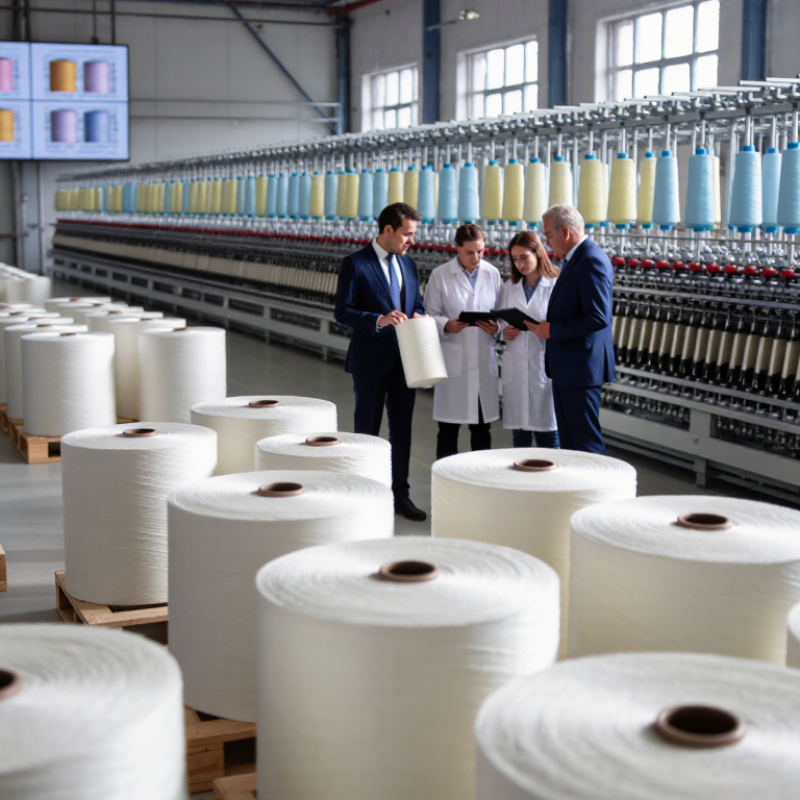
Polyester staple yarn is a cut, short-length fiber used in spinning, filling, and nonwoven production. Its types include solid, hollow, siliconized, dope-dyed, and recycled polyester staple yarn. Solid fibers offer consistent strength and smooth processing. Hollow fibers trap air and create lighter, warmer fillings. Siliconized fibers feel softer and move easily through carding equipment.
Key properties include high tensile strength, abrasion resistance, quick drying, and low moisture absorption. Polyester also keeps its shape after repeated washing. However, excessive heat can cause shrinkage, yellowing, or surface damage. Buyers should check the recommended processing temperature carefully. Small differences matter. Fiber length, denier, crimp, finish, and color consistency directly affect yarn quality. A laboratory report should confirm these details instead of relying only on visual inspection.
Common applications include blended apparel yarns, blankets, sportswear, home textiles, mattress filling, filtration media, automotive interiors, and construction nonwovens. Recycled polyester staple yarn can support lower-impact product plans, but its quality may vary between batches. Traceability, tensile testing, moisture checks, and contamination controls are therefore important. A cheaper offer may become expensive when uneven dyeing or excessive waste appears during production. Buyers should request samples, compare test data, and evaluate performance on their actual machines. This step is sometimes skipped, and that remains a practical mistake.
This comparison shows typical tenacity values for three widely used polyester staple fiber types. High-tenacity polyester is commonly selected for sewing thread, industrial fabrics, and automotive textiles, while regular polyester is widely used in apparel and home textiles. Hollow conjugate polyester is often used in nonwovens, filling materials, insulation, and fiberfill products.
Values represent typical industry ranges expressed as midpoint estimates; actual performance varies according to polymer grade, fiber cross-section, staple length, spinning process, and finishing treatment.
Choosing among the 10 best polyester staple yarn suppliers requires more than comparing prices. Start with technical fit. Confirm fiber length, denier, crimp, color consistency, tensile strength, and oil content. Ask for a current specification sheet and production sample. A sample can reveal uneven blending or excessive lint before a large order.
Reliable suppliers provide test reports from qualified laboratories. Check whether results match the delivered batch, not only an older document. Request evidence of recycled content, origin, and chemical compliance when relevant. Traceability should reach the fiber source and production site. A polished website proves little. Factory photos can also be outdated. Independent audits, clear certificates, and verifiable references carry greater weight.
Evaluate commercial performance carefully. Compare minimum order quantities, lead times, packaging, payment terms, and claims procedures. Ask how the supplier handles shade variation or damaged cartons. Their response often shows more than a sales presentation. Communication matters. Can the technical team answer precise questions quickly? Can they support different markets and shipping conditions? I have learned that the cheapest quotation may hide unstable quality or costly delays. Still, one audit cannot prove everything. Review several batches, keep written records, and reassess performance after delivery. Supplier evaluation is an ongoing process.
Choosing among the top 10 polyester staple yarn suppliers for global buyers requires more than comparing price lists. Reliable suppliers should provide consistent denier, stable moisture regain, and clear fiber-length specifications. Their production records should show dependable delivery across different seasons. Buyers also need laboratory reports, sample approvals, and traceable raw material information before placing large orders.
In practical sourcing, recycled and virgin polyester yarns may serve different applications. Spinning mills often assess tenacity, elongation, color uniformity, and blending performance. Ask for recent test data. Keep testing. A capable supplier should explain quality controls, packaging methods, and shipment procedures without vague promises. Communication speed also matters when production schedules change. However, no ranking is perfect. A supplier with excellent technical quality may offer slower customization or limited regional support. Another may provide competitive prices but weaker documentation. Global buyers should compare at least three samples under identical testing conditions. Check carton strength, moisture protection, and labeling before shipment. Small details can expose larger process problems. Regular audits, written specifications, and clear complaint procedures help reduce avoidable risk. The best choice is not always the cheapest option. It is the supplier that matches material performance, order volume, compliance needs, and long-term production reality.
Anonymous supplier comparison based on commonly requested polyester staple yarn specifications. Buyers should verify current certificates, capacity, pricing, and delivery terms directly before placing an order.
| Supplier Profile | Primary Product Focus | Polymer Basis | Typical Yarn Options | Common Denier Range | Available Features | Sustainability Documentation | Typical Packaging | Buyer Due-Diligence Priority |
|---|---|---|---|---|---|---|---|---|
| Supplier Profile 01 | General-purpose polyester staple fiber for spinning | Virgin PET polymer | Semi-dullBrightSolid | 1.2D–3.0D | High tenacity; consistent cut length; suitable for blended yarns | Request ISO 9001 and product technical data sheet | Compressed bales with moisture-resistant wrapping | Confirm denier tolerance, fiber length, and bale weight |
| Supplier Profile 02 | Recycled polyester staple yarn materials | Post-consumer recycled PET | RecycledSemi-dullSolid | 1.2D–6.0D | Suitable for sustainable apparel, home textiles, and nonwoven applications | Request GRS or RCS scope certificate and transaction certificate | Compressed bales; recycled-content identification required | Verify recycled input percentage and chain of custody |
| Supplier Profile 03 | Fine-denier staple fiber for soft-touch fabrics | Virgin PET polymer | MicrofiberSiliconizedLow-pill | 0.7D–1.2D | Soft hand feel; improved coverage; suitable for fleece and apparel fabrics | Request OEKO-TEX product certification where required | Small compressed bales with batch labeling | Test softness, crimp, finish oil, and pilling performance |
| Supplier Profile 04 | High-strength staple fiber for industrial textiles | Virgin PET polymer | High tenacityLow shrinkage | 1.5D–15D | High tensile performance; suitable for sewing thread and technical fabrics | Request ISO 9001, tensile data, and heat-shrinkage test results | Heavy-duty compressed bales or customized pallet packing | Validate tenacity, elongation, shrinkage, and oil content |
| Supplier Profile 05 | Hollow conjugate fiber for filling applications | Virgin PET polymer | HollowSiliconizedConjugate | 3D–15D | Good loft and resilience; used in bedding, upholstery, and padding | Request relevant chemical compliance and filling-performance reports | Compressed bales with protective inner wrapping | Check bulk, resilience, silicon finish, and recovery after compression |
| Supplier Profile 06 | Dope-dyed polyester staple fiber | Virgin PET polymer with color masterbatch | Dope-dyedColorfastLow-water processing | 1.2D–6.0D | Reduced dyeing requirement; suitable for colored yarn and nonwoven products | Request color fastness data and restricted-substance compliance documents | Color-coded bales with lot and shade identification | Approve laboratory dips and verify shade consistency between lots |
| Supplier Profile 07 | Low-melt polyester staple fiber for bonding | Polyester copolymer sheath and polyester core | BicomponentLow-meltThermal-bonding | 2D–6D | Thermal bonding at lower processing temperatures; used in padding and nonwovens | Request melting-point range, SDS, and thermal-bonding test data | Moisture-protected compressed bales | Confirm sheath/core ratio, melting range, and bonding strength |
| Supplier Profile 08 | Staple fiber for recycled and blended spinning | Virgin PET or certified recycled PET, subject to order | Cotton-typeSpinnableBlending-grade | 1.2D–2.5D | Designed for cotton blends, ring spinning, open-end spinning, and rotor spinning | Request fiber-length distribution, quality-management certificate, and recycled-content proof if applicable | Compressed bales with production-lot traceability | Review staple length, crimp, cohesion, and spinning trial results |
| Supplier Profile 09 | Anti-pilling polyester staple fiber for apparel | Virgin PET polymer | Low-pillSoft finishSemi-dull | 1.2D–3.0D | Suitable for knitwear, fleece, uniforms, and blended apparel yarns | Request pilling test method, chemical compliance documents, and technical data sheet | Standard compressed bales with moisture and lot protection | Conduct fabric-level pilling, dyeing, and shade evaluation |
| Supplier Profile 10 | Custom-specification polyester staple fiber | Virgin PET, recycled PET, or blended feedstock by specification | Custom denierCustom colorCustom finish | 0.7D–15D | Custom cut length, crimp, luster, finish, color, and functional treatment | Request production audit, applicable ISO documentation, and complete batch records | Customized bale density, labeling, and pallet configuration | Approve a pre-production sample and define acceptance tolerances in the contract |
Selecting the ten best polyester staple yarn suppliers requires more than comparing headline prices. Global buyers should examine fiber length, denier, tenacity, color consistency, and contamination control. A reliable supplier provides recent test reports, lot samples, and a clear certificate of analysis. Production capacity also matters. Monthly output, backup machinery, and realistic lead times reveal whether a supplier can support repeat orders.
Pricing needs careful comparison. Request offers using the same basis, such as FOB or CIF, and include packaging, testing, payment terms, and minimum order quantities. A low quote may hide longer lead times or weaker quality control. I once treated capacity claims as proof of reliability; that was too simple. Buyers should verify shipment records, factory audits, and response times before approving a large order. Certifications such as ISO 9001, OEKO-TEX, or recycled-content standards can support trust, but each certificate should match the actual product and remain valid.
Tips:
Compare samples from identical specifications. Check strength after processing. Ask for three recent production records. Confirm whether certifications cover the manufacturing site. Keep a small allowance for price changes, because freight and polymer costs can move quickly. A spreadsheet helps, but human judgment still matters. Not every polished document reflects stable production.
Choosing among the 10 Best Polyester Staple Yarn Suppliers for Global Buyers requires more than comparing prices. Textile Exchange’s 2024 Materials Market Report states that polyester represented 57% of global fiber production in 2023. This scale creates many options, but quality can vary sharply between lots. Ask suppliers for denier, staple length, tenacity, crimp, moisture regain, and shade consistency. Request recent test reports from independent laboratories. A supplier should also explain its quality system, traceability process, production capacity, and complaint response time.
International orders need equal attention. UNCTAD’s Review of Maritime Transport 2024 highlights that maritime transport carries over 80% of global merchandise trade by volume. Delays can therefore affect production schedules quickly. Confirm the Incoterm, loading port, packaging method, insurance responsibility, and document list before payment. Agree on acceptable tolerance ranges and inspection points in writing. A pre-shipment sample is useful, though it cannot guarantee every carton will match perfectly. That limitation deserves honest planning.
Tips: Compare landed cost, not only the yarn price. Include freight, duties, testing, banking charges, and possible storage fees. Check whether the supplier can provide a batch number on every package. Keep a written approval sample. Use staged payments when commercially appropriate, and verify the beneficiary details independently. Recycled content claims should include recognized certification and transaction records. In practice, buyers sometimes focus too heavily on fast quotations. I would question that habit. A cheaper offer may hide longer lead times, weaker documentation, or inconsistent fiber performance. Small pilot orders can reveal problems before they reach a full container.