China’s textile industry remains central to global apparel, home-furnishing, and technical-fabric supply chains. China Customs data, reported in international trade statistics, placed China’s textile and apparel exports near US$293.6 billion in 2023. This scale reflects deep manufacturing capacity. It also creates demanding questions about traceability, energy use, and delivery reliability.
The Textile Exchange Materials Market Report 2024 estimated global fiber production at 132 million tonnes in 2023. It expects production to approach 160 million tonnes by 2030. China’s leading manufacturers respond through vertically integrated mills, automated spinning lines, digital dyeing systems, and recycled-fiber production. Some factories operate beside logistics hubs, shortening the journey from raw yarn to finished fabric. Others specialize in polyester, cotton, viscose, nylon, or functional textiles.
Scale is not proof of quality.
Fashion and textile sustainability expert Orsola de Castro has stated, “The most sustainable garment is the one already in your wardrobe.” Her point challenges manufacturers and buyers to measure durability, not only output. Supplier selection should therefore examine certifications, testing procedures, wastewater controls, labor practices, and production consistency. Reports from the International Labour Organization and Textile Exchange also support more transparent supply-chain evaluation.
However, published data cannot reveal everything. Factory disclosures may differ in scope, timing, and accuracy. A supplier can appear efficient while its dye-house water use remains difficult to verify. This guide reviews China’s top textile industry manufacturers and suppliers through a practical lens. It considers capability, product range, export experience, quality control, sustainability evidence, and communication. The rankings are useful, but not absolute. Real purchasing decisions still require samples, audits, and careful verification.
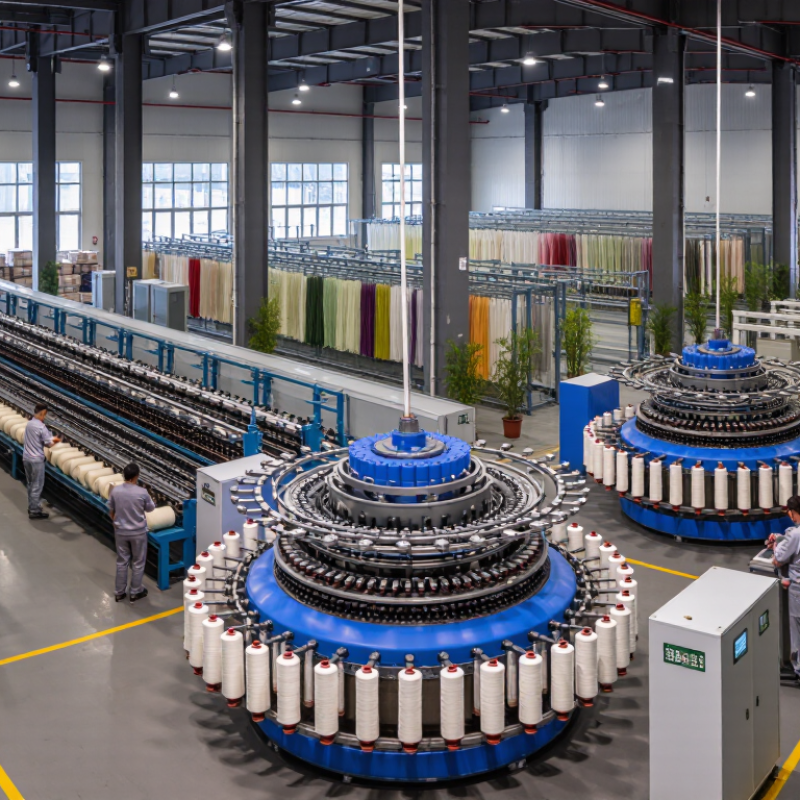
China’s textile industry stretches from natural fibers and spinning to garments, home textiles, and technical materials. Its history reaches back to silk production, but modern expansion accelerated after market reforms and export-led industrial growth. Today, the production map is dense. Mills convert fiber into yarn, fabric, dyed goods, and finished products within relatively connected regional networks.
According to China Customs, China’s textile and apparel exports reached approximately US$293.6 billion in 2023. The WTO World Trade Statistical Review 2024 also identifies China as the leading exporter in global textile and clothing trade. Textile Exchange’s Materials Market Report 2024 estimated global fiber production at 124 million tonnes in 2023. China remains central to synthetic-fiber capacity and large-scale fabric processing. Yet scale does not guarantee consistency.
For international buyers, capability is visible in practical details. A reliable supplier should document fiber content, colorfastness, shrinkage, testing procedures, and production capacity. It should also explain wastewater controls and worker-safety practices clearly. These details matter. A factory floor may look efficient, while weak traceability creates costly uncertainty later. China’s textile sector is also moving toward recycled fibers, digital production, and higher-value technical textiles. Progress is uneven, and some sustainability claims still need stronger independent verification. A serious assessment must examine records, samples, audit evidence, and delivery performance—not only attractive prices. That is less impressive, but more realistic.
China’s textile production is concentrated in connected regional clusters. The Yangtze River Delta links Zhejiang, Jiangsu, and Shanghai through fabric mills, dyeing plants, machinery, and ports. Shaoxing is known for fabric production and printing. Nantong supports home textiles, while Jiangsu adds strong spinning and garment capacity. China Customs reported approximately US$293.6 billion in textile and apparel exports in 2023. This figure shows the scale, but not every cluster offers the same capability.
Southern China has a different structure. Guangdong combines fabric markets, garment workshops, accessories, and export logistics. Fujian is strong in knitted fabrics and performance clothing. Shandong contributes cotton textiles, home textiles, and technical materials. A 2023 review from the China Textile Industry Federation identified more than 200 specialized textile clusters nationwide. These clusters reduce transport time and simplify supplier coordination. However, regional labels can mislead. A capable factory may still outsource dyeing, finishing, or testing.
Tips: Match the region with the product. Ask for production maps, recent test reports, and wastewater compliance records. Confirm whether key processes happen in-house. The ITMF Global Textile Industry Survey has repeatedly reported pressure from weaker orders and higher costs. Buyers should therefore compare capacity, lead times, energy use, and quality controls, not only quoted prices. Small details matter. A nearby port cannot fix inconsistent fabric shrinkage.
China’s leading textile manufacturers supply fabrics for apparel, home furnishings, workwear, and technical applications. Their product ranges include cotton, linen, polyester, nylon, viscose, blended yarns, knitted fabrics, and woven materials. Some factories also produce printed, dyed, coated, brushed, or water-resistant textiles.
Material selection requires practical testing. A sourcing team may check fabric weight, shrinkage, colorfastness, pilling, seam strength, and surface feel. Factory visits can reveal details that catalogues hide, such as uneven lighting, storage dust, or weak packaging. Reliable suppliers usually maintain batch records and provide pre-production samples. Lab reports help, but they should match the actual shipment.
Production capability varies widely. Some facilities handle spinning, weaving, dyeing, finishing, cutting, and sewing in connected operations. Others specialize in one stage and coordinate with nearby partners. This difference affects lead times, quality control, and communication. Not every large factory is the best fit. Smaller suppliers may offer closer technical support, but their capacity needs careful verification. Production schedules can also change during peak seasons. A clear approval process, written specifications, and independent inspection reduce avoidable risks. Good suppliers discuss limitations openly, instead of promising everything.
| Product Category | Common Materials | Typical Production Capability | Common Specifications | Primary Processes | Typical Applications | Common Quality Checks |
|---|---|---|---|---|---|---|
| Cotton Woven Fabrics | Cotton, cotton-polyester, cotton-elastane | Plain, twill, poplin, canvas, sateen, and shirting constructions | Approximately 80–300 g/m²; finished widths commonly 110–180 cm | Spinning, weaving, desizing, scouring, bleaching, dyeing, printing, finishing | Shirts, uniforms, trousers, bedding, bags, and home furnishings | Fabric weight, width, shrinkage, colorfastness, pilling, tear strength |
| Polyester Woven Fabrics | Polyester filament, polyester staple fiber, recycled polyester | High-density, textured, microfibre, ripstop, and coated constructions | Approximately 60–250 g/m²; widths commonly 145–320 cm | Air-jet or rapier weaving, dyeing, calendaring, coating, laminating | Sportswear, outerwear, luggage, umbrellas, workwear, and lining fabrics | Tensile strength, hydrostatic pressure, water repellency, colorfastness, abrasion |
| Knitted Fabrics | Cotton, polyester, nylon, viscose, modal, elastane blends | Single jersey, interlock, rib, pique, fleece, and warp-knit structures | Approximately 120–360 g/m²; open width commonly 140–220 cm | Circular knitting or warp knitting, dyeing, compacting, brushing, raising | T-shirts, underwear, casualwear, activewear, children's clothing | Stretch and recovery, spirality, dimensional stability, pilling, colorfastness |
| Denim Fabrics | Cotton, cotton-elastane, cotton-polyester, recycled cotton blends | Indigo and sulfur-dyed warp yarns with twill construction | Approximately 8–14 oz/yd²; widths commonly 145–165 cm | Warp preparation, sizing, rope or slasher dyeing, weaving, sanforizing, finishing | Jeans, jackets, skirts, uniforms, bags, and workwear | Tear strength, seam slippage, crocking, shrinkage, shade matching, abrasion |
| Yarns and Threads | Cotton, polyester, nylon, viscose, acrylic, wool, and blended fibers | Spun yarns, filament yarns, core-spun yarns, sewing threads, and textured yarns | Cotton counts commonly Ne 10–60; filament yarns commonly 30–300 denier | Opening, carding, combing, drawing, spinning, twisting, texturing, winding | Weaving, knitting, embroidery, sewing, upholstery, and industrial textiles | Count or denier, twist, tensile strength, elongation, evenness, hairiness, defects |
| Home Textile Products | Cotton, polyester, linen, viscose, microfiber, bamboo-based regenerated fibers | Bed linen, towels, blankets, curtains, cushion covers, and table textiles | Towels commonly 350–700 g/m²; bedding commonly 110–180 g/m² | Weaving or knitting, dyeing, printing, embroidery, cutting, sewing, packing | Hotels, residential interiors, healthcare facilities, and hospitality projects | Absorbency, laundering shrinkage, colorfastness, seam strength, dimensional stability |
| Technical Textiles | High-tenacity polyester, nylon, aramid, polypropylene, glass fiber, basalt fiber | Coated fabrics, geotextiles, filtration media, reinforcement fabrics, and safety textiles | Approximately 100–1,200 g/m², depending on structure and end use | Weaving, needling, nonwoven formation, coating, laminating, calendaring | Automotive, construction, agriculture, filtration, transport, and protective equipment | Tensile and tear strength, air permeability, hydrostatic pressure, thermal resistance |
| Nonwoven Materials | Polypropylene, polyester, viscose, polyethylene, cellulose, and blended fibers | Spunbond, meltblown, spunlace, needle-punched, thermal-bonded, and wet-laid materials | Approximately 15–200 g/m²; roll widths commonly 1.6–3.2 m | Fiber opening, web formation, bonding, embossing, hydrophilic or antistatic treatment | Hygiene products, medical disposables, filtration, packaging, agriculture, construction | Basis weight, tensile strength, elongation, air permeability, absorbency, uniformity |
| Dyeing, Printing, and Finishing | Cotton, polyester, nylon, viscose, wool, blends, and technical fabrics | Piece dyeing, yarn dyeing, digital printing, rotary printing, coating, and functional finishing | Color matching commonly performed with standardized laboratory samples and approval panels | Reactive, disperse, acid, pigment, or vat dyeing; softening, water-repellent, flame-retardant treatments | Apparel, home textiles, outdoor products, uniforms, and industrial materials | Shade deviation, colorfastness to washing and rubbing, pH, formaldehyde, restricted substances |
| Garments and Cut-and-Sew Products | Woven fabrics, knitted fabrics, denim, fleece, synthetic shells, and blended materials | Sampling, grading, automated cutting, sewing, pressing, inspection, and export packing | Small-batch sampling through high-volume production; size ranges and tolerances set by buyer specifications | Pattern development, CAD marker making, cutting, seam assembly, finishing, metal detection | Fashionwear, workwear, sportswear, uniforms, children's clothing, and private-label products | Measurement tolerance, seam strength, needle detection, workmanship, labeling, packaging accuracy |
Evaluating Chinese textile manufacturers requires more than comparing quoted prices. A low unit cost can hide high minimum orders, unstable dyeing, or expensive rework. Request current samples, technical data, and a factory profile. Check fiber content, fabric weight, width, shrinkage, and colorfastness. Ask how each result was tested. Independent laboratory records are stronger than attractive sales sheets. Keep one approved sample as the physical reference for future production.
A responsible assessment should examine both capability and working conditions. Visit the facility, or arrange an independent audit when travel is impractical. Observe cutting tables, storage areas, sewing lines, and final inspection points. Review machinery maintenance, worker safety procedures, wastewater handling, and required legal documents. Ask whether production is handled internally or outsourced. A polished showroom proves little. Capacity should match your order size, delivery schedule, and quality expectations. A small trial order can expose problems early.
Reliability also appears in communication. Request a written quotation covering material specifications, minimum quantities, lead times, payment stages, packaging, and inspection rights. Confirm who approves color changes and who pays for defective goods. Track response times and document every decision. No supplier is flawless. A missed shade or late fabric approval can still happen. That uncomfortable possibility deserves a written remedy, not a verbal promise. Keep revised shade cards, inspection reports, and delivery changes in the purchase file.
China's textile and apparel export value increased from approximately USD 271.8 billion in 2019 to USD 340.9 billion in 2022, before declining to about USD 293.6 billion in 2023. When evaluating Chinese textile manufacturers and suppliers, buyers should compare production capability, quality systems, export experience, compliance documentation, lead times, and product specialization rather than relying only on market scale.
Source: China Customs trade statistics and publicly reported industry summaries. Values represent China’s total textile and apparel exports, not individual company sales.
China’s textile manufacturers increasingly compete through measurable quality, sustainability, and reliable trade procedures. Textile Exchange’s Materials Market Report 2024 estimates global fiber production reached 124 million tonnes in 2023. It may approach 160 million tonnes by 2030. That growth increases pressure on factories to reduce waste, document materials, and control production consistency.
Quality begins with practical systems. ISO 9001 supports documented inspections, corrective actions, and batch traceability. A reliable supplier should test colorfastness, shrinkage, tensile strength, and restricted substances before shipment. OEKO-TEX-style chemical screening can support buyer confidence, but one certificate cannot prove every production lot. Factory records may still be incomplete. That weakness deserves honest review.
Sustainability also requires evidence beyond recycled-content claims. Suppliers can provide fiber certificates, energy records, wastewater testing, and supplier-chain maps. The Textile Exchange report shows recycled fibers remain a minority of total global fiber production, so material transitions are unfinished. International trade adds another layer. Accurate HS classification, commercial invoices, packing lists, origin documents, and agreed Incoterms reduce customs disputes. Buyers should compare declared weights with loading records and inspect random cartons. Small discrepancies matter. Human-rights due diligence, lawful working conditions, and transparent subcontracting are essential in every export program. Yet digital traceability is not perfect, especially among smaller workshops, and buyers should allow room for verification rather than relying on polished documents.