
Top Polyester Staple Fiber Suppliers for Global Buyers
Global buyers need more than a long supplier list when sourcing polyester staple. They need suppliers that can deliver consistent quality, reliable communication, and practical commercial terms. This guide introduces leading polyester staple fiber suppliers serving textile mills, nonwoven producers, filling manufacturers, and other industrial users. It focuses on evidence rather than attractive claims.
Product details matter. Buyers should compare denier, cut length, crimp, color, strength, moisture regain, and silicon finish. A 1.4D fiber may suit soft spun yarn, while coarser grades can support filling or technical applications. Recycled polyester staple also requires careful review of recycled content, traceability, and certification documents. Small differences can affect carding performance, yarn evenness, fabric handfeel, and production waste.
Supplier evaluation should include factory capacity, sample consistency, minimum order quantities, lead times, packaging, and export experience. Independent certificates can help, but paperwork never replaces physical testing. Requesting samples from several suppliers provides a clearer comparison under real machine conditions. Ask how quality complaints are investigated, not only how quality is advertised. Good suppliers usually explain inspection points, batch controls, and corrective actions without avoiding difficult questions.
Price is important. It is not everything. A cheaper offer may create hidden costs through delayed shipments, unstable fiber properties, or excessive waste. Buyers should also assess payment terms, port access, logistics resilience, and environmental reporting. No supplier is perfect, and published information may remain incomplete. That limitation deserves attention. The strongest choice is usually the supplier whose capabilities match the buyer’s process, risk level, and long-term requirements.
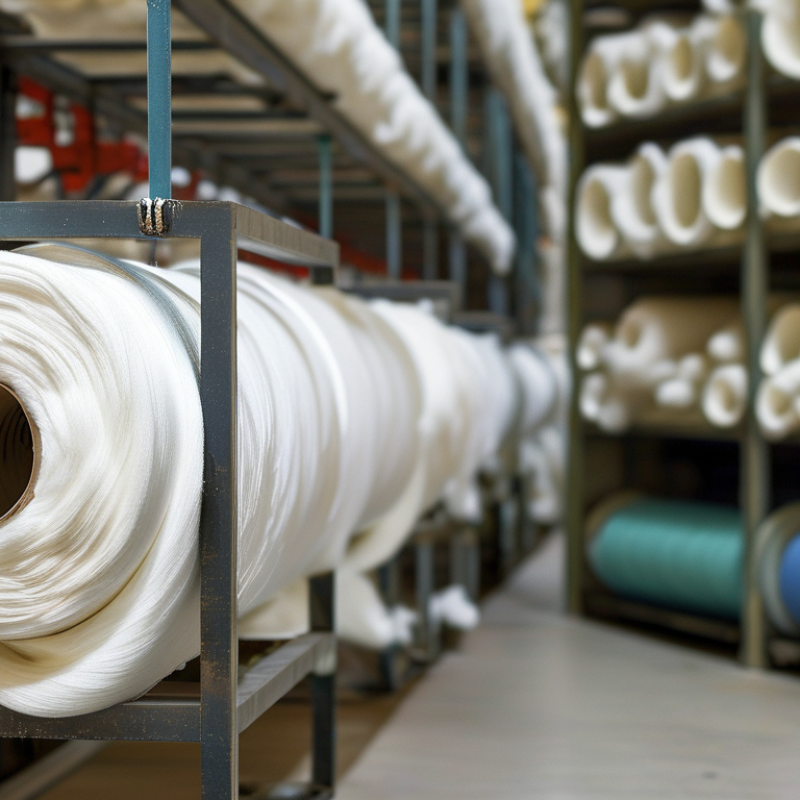
What Is Polyester Staple Fiber and Where Is It Used?
Polyester staple fiber (PSF) is a man-made fiber cut into short lengths. It is produced by melting polyester polymer and spinning it into continuous strands. These strands are then cut for spinning, blending, or nonwoven production. Unlike continuous filament, staple fiber resembles natural fibers during processing. Common specifications include denier, cut length, crimp, color, and finish. Crimp gives the fiber bulk and softness. Fiber selection should match the final application. A fine denier can improve fabric softness. A heavier denier may provide better resilience. Yet specifications can mislead. Production conditions matter too. Moisture, finish, and cutting accuracy can affect carding, drafting, and fabric appearance.
In clothing, PSF is used in shirts, trousers, uniforms, fleece, and workwear. Blended with cotton, viscose, or wool, it can improve strength, drying speed, and dimensional stability. Spun PSF also supports affordable household textiles, including curtains, bedding, and upholstery fabrics. Outside apparel, it appears in pillows, quilts, mattress padding, and insulation. Nonwoven grades serve filtration media, hygiene products, wipes, and construction fabrics. Automotive interiors often use PSF for carpets, trunk liners, and acoustic padding. Recycled PSF can reduce dependence on virgin raw materials, but quality may vary between batches. Buyers should request test data for fiber length, tensile strength, color, moisture, and contamination. Testing matters. Supplier claims deserve verification.
Top Polyester Staple Fiber Suppliers for Global Buyers - What Is Polyester Staple Fiber and Where Is It Used?
| Fiber Type | Polymer Content | Typical Cross-Section | Common Cut Lengths | Typical Characteristics | Main End Uses | Key Buyer Specification Checks |
|---|---|---|---|---|---|---|
| Virgin Solid Staple Fiber | Polyethylene terephthalate (PET) | Round, solid | Commonly 32–64 mm for spinning; other lengths are available | Consistent strength, dimensional stability, abrasion resistance and quick drying | Yarn spinning, apparel fabrics, home textiles and sewing products | Denier or decitex, staple length, tenacity, elongation, crimp, color and moisture content |
| Hollow Conjugate Fiber | PET, often produced with a hollow or bicomponent structure | Hollow; frequently hollow and siliconized for filling applications | Commonly 32–64 mm for wadding and filling | Low density, resilience, loft and thermal insulation | Pillows, quilts, duvets, cushions, sleeping bags and insulated garments | Hollow ratio, silicon finish, bulk, recovery, fiber migration, odor and cleanliness |
| Crimped Fiber | PET | Solid or hollow with mechanical crimp | Typically selected according to the nonwoven or filling process | Improved cohesion, loft, softness and processability compared with straight fiber | Nonwoven webs, batting, furniture padding, automotive interiors and filtration media | Crimp frequency, crimp stability, fiber length, cohesion, web uniformity and thermal behavior |
| Siliconized Fiber | PET with a silicone-based surface finish | Usually solid or hollow, with a lubricated surface | Often 32–64 mm for filling and waddings | Smooth hand feel, lower fiber-to-fiber friction and improved filling recovery | Soft toys, pillows, quilts, cushions and comforters | Finish uniformity, silicone add-on, loft retention, odor, skin-contact requirements and wash durability |
| Non-Siliconized Fiber | PET without a silicone surface finish | Usually solid or hollow | Selected according to spinning, carding or thermal-bonding requirements | Higher surface friction and better web or yarn cohesion in selected processes | Spun yarns, needle-punched nonwovens, geotextiles and industrial felts | Carding performance, cohesion, antistatic behavior, finish content, strength and uniformity |
| Recycled Polyester Staple Fiber | Recycled PET, commonly from post-consumer or post-industrial waste | Solid, hollow or conjugate, depending on the production route | Available in spinning, nonwoven and filling lengths | Can reduce dependence on virgin polymer while retaining the performance profile required for the end use | Recycled-content apparel, home textiles, padding, automotive textiles and nonwovens | Recycled-content percentage, chain-of-custody documentation, contaminant control, color, strength and batch consistency |
| Low-Melt Binder Fiber | Usually PET-based bicomponent fiber with a lower-melting sheath | Core-sheath or side-by-side bicomponent structure | Commonly used in short-cut nonwoven and thermal-bonding grades | Forms bonding points when heated, reducing or eliminating the need for liquid adhesives | Thermally bonded waddings, automotive components, filters, hygiene products and molded nonwovens | Melting and bonding temperature, sheath composition, shrinkage, bond strength and processing window |
| Flame-Retardant Fiber | PET modified with flame-retardant additives or copolymer components | Solid, hollow or crimped, depending on the application | Specified according to the target textile or nonwoven process | Designed to meet defined flammability performance requirements; results depend on construction and test method | Contract textiles, transportation interiors, protective products, mattresses and technical nonwovens | Applicable flammability standard, test method, afterflame and afterglow, smoke behavior, durability and chemical compliance |
Buyer note: Polyester staple fiber is a cut-length form of PET fiber. Final performance depends on polymer quality, denier, staple length, crimp, finish, cross-section, color, recycled content and processing conditions. Buyers should request a technical data sheet, certificate of analysis, safety documentation and representative production samples before placing a commercial order.
Related Posts
-
2026 Best Polyester Staple Fiber Products for Global Buyers?
-
2026 How to Choose the Right Polyester Staple Yarn for Your Projects?
-
What is Polyester Staple Yarn and Its Applications in Textiles?
-
How to Choose the Best Polyester Staple Yarn for Your Needs?
-

Top 10 Benefits of Polyester Staple Fiber in Everyday Products?
-

2026 Top Trends in Polyester Staple Fiber Industry Insights and Innovations?

 No. 85 “Alexander Malinov” Blvd,
1715 Sofia, Bulgaria
No. 85 “Alexander Malinov” Blvd,
1715 Sofia, Bulgaria +359 2 953 0387
 sale@chemicalmojo.com