Global textile buyers are rechecking fiber choices as costs, lead times, and sustainability evidence face closer scrutiny. Textile Exchange’s Materials Market Report 2024 estimates global fiber production reached 124 million tonnes in 2023. Polyester represented about 57% of that volume. This scale matters. It supports broad supply availability, established spinning knowledge, and competitive purchasing options across regions.
For buyers, polyester staple can offer consistent length, controlled crimp, fast drying, and dependable blending performance. These properties suit apparel, home textiles, filling materials, and many nonwoven applications. However, headline volume does not guarantee a suitable shipment. A specification sheet should state denier, cut length, crimp, color, moisture, oil content, and packing format. Trial bales and independent testing can reveal problems hidden by a low quotation. ISO fiber-analysis methods and supplier test reports also strengthen purchasing decisions.
ITMF’s 2024 Global Textile Industry Survey describes uneven market conditions and cautious investment across textile manufacturing. That finding makes supply continuity and responsive communication more valuable than price alone. Recycled polyester may improve a product’s material profile, but certification and feedstock traceability require careful checking. Better is not automatic. Buyers should verify claims through recognized transaction certificates, audit records, and consistent batch data. The choice is not flawless. Polyester remains fossil-based, and recycling systems still have practical limits. Even so, its mature production network and measurable performance explain why global buyers continue to evaluate polyester staple. The strongest decision balances cost, function, documentation, and the intended product life.

Polyester staple fiber is made by extruding polyester into continuous filaments, then cutting them into fixed lengths. Common cut lengths include 32, 38, 51, and 64 millimeters. Cut length affects blending, carding, yarn strength, and fabric texture. Shorter fibers can blend easily, while longer fibers often improve cohesion. However, actual performance depends on crimp, finish, and processing equipment.
Denier measures fiber weight, not length. One denier equals one gram per 9,000 meters of fiber. Lower denier usually creates a softer handle and finer surface. Higher denier can support firmness, resilience, and filling volume.
Global applications include spinning, nonwoven fabrics, home textiles, automotive interiors, insulation, and fiberfill. A specification sheet may look complete, yet small differences in moisture, whiteness, or crimp can affect production. That is where careful testing matters.
Tips: Match cut length and denier with the final process, not only the product name. Request test data for tensile strength, moisture, oil content, and contamination. Check sample performance on your own carding or blending line. This step can reveal unexpected behavior. Do not overlook packaging details, especially during long-distance transport. Inconsistent compression or damaged bags may create avoidable handling problems. Specifications are useful, but they are not perfect predictions.
Why Choose Polyester Staple Fiber for Global Buyers?
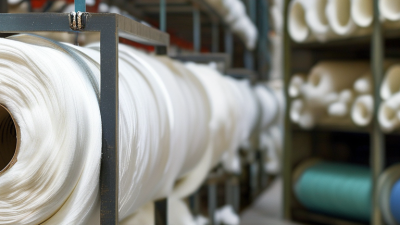
Polyester reached 57.7 million tonnes in 2022, according to Textile Exchange. This scale shows how deeply polyester is connected to global textile production. For buyers, that usually means broader supplier access, steadier availability, and more familiar processing standards. Polyester staple fiber can support spinning, filling, insulation, and nonwoven applications. Its practical value is easy to see in warehouses: consistent bales, defined cut lengths, and predictable handling during production. It also dries quickly and maintains useful dimensional stability in many end products.
Scale alone does not guarantee a good purchase. A low price can hide uneven denier, excess moisture, weak crimp, or inconsistent color. These details may appear after opening hundreds of kilograms. Careful buyers should check fiber length, fineness, strength, moisture content, oil finish, and packaging condition. Independent testing and batch records add confidence, especially across long-distance shipments. Recycled content may also require clear documentation and traceability.
Small details matter. A lot.
Some purchasing teams focus too heavily on annual volume. That is understandable, but incomplete. A supplier with reliable quality control may reduce waste, machine adjustments, and delayed deliveries. Still, polyester is not automatically the best answer for every application. End-use performance, environmental targets, local regulations, and total transport impact deserve review. The market is large, yet responsible selection remains specific and sometimes imperfect.
Key market facts and purchasing considerations for global buyers of polyester staple fiber.
| Data Dimension | 2022 Data or Technical Range | What It Means for Global Buyers | Reference |
|---|---|---|---|
| Global polyester fiber production | 57.7 million tonnes | Demonstrates the large manufacturing base, broad availability of feedstock, and strong international supply capacity of polyester fibers. | Textile Exchange, materials market data |
| Approximate share of global fiber production | About 50% | Polyester is one of the dominant fiber categories, supporting stable demand across apparel, home textiles, technical textiles, and nonwoven applications. | Calculated from 57.7 million tonnes of polyester production and approximately 116 million tonnes of total global fiber production in 2022; Textile Exchange |
| Main polymer type used in staple fiber | Polyethylene terephthalate (PET) | PET provides a standardized polymer platform suitable for spinning, blending, dyeing, and the production of different staple fiber specifications. | ISO 2076:2021; ISO 1833-11:2017 |
| Common staple fiber cut lengths | Approximately 32–76 mm | Different cut lengths allow buyers to select materials for cotton-like yarns, wool-like products, filling, needle-punched nonwovens, and blended spinning systems. | Common commercial specification ranges; application-dependent |
| Typical dry tensile strength | Approximately 2.5–7.0 cN/dtex | Relatively high strength supports durability in garments, household fabrics, workwear, upholstery, and industrial textile products. | Typical polyester staple fiber specification ranges; test method may vary |
| Moisture regain | Approximately 0.4% | Low moisture regain enables quick drying and dimensional stability, although product design may require moisture-management finishes for next-to-skin applications. | ISO 6741-1:1989; standard polyester fiber reference data |
| Melting temperature of PET fiber | Approximately 250–260°C | The relatively high melting range supports thermal processing and heat-setting, while buyers must control processing temperatures to prevent fiber damage. | Typical PET polymer and fiber technical data; ASTM D3418 |
| Common cross-sectional profiles | Round, hollow, trilobal, and specialty profiles | Cross-sectional design can influence luster, bulk, softness, insulation, resilience, and the visual appearance of finished textiles. | General fiber engineering practice and textile testing references |
| Typical end-use categories | Apparel, home textiles, filling, nonwovens, automotive, and industrial textiles | The broad application base helps buyers diversify demand and select one fiber platform for multiple product categories. | Textile industry application classifications |
| Recycled polyester availability | Established recycled-PET supply stream | Buyers can evaluate recycled staple fiber options for products requiring recycled-content claims, subject to material traceability and certification requirements. | Textile Exchange, preferred fiber and recycled materials reporting |
| Key purchasing specifications | Denier, cut length, crimp, finish, color, strength, elongation, and moisture content | A clear specification sheet reduces quality variation and improves compatibility with carding, spinning, filling, and nonwoven production lines. | Common textile procurement and quality-control practice |
| Sustainability factors to verify | Recycled content, chain of custody, energy use, water use, emissions, and end-of-life options | Global buyers should assess the complete product life cycle rather than relying only on fiber type or recycled-content percentage. | ISO 14040:2006; ISO 14044:2006; Textile Exchange guidance |
Note: Technical values are representative ranges and may vary according to polymer grade, spinning process, additives, fiber profile, finish, and testing conditions. Market data refers to global fiber production in 2022.
Why Choose Polyester Staple Fiber for Global Buyers?
PET polyester typically shows about 0.4% moisture regain under ASTM D1909 testing. This low figure helps fibers remain stable during storage, spinning, and blending. Fabrics may dry faster after washing and feel less affected by humid conditions. However, moisture regain is not the same as complete moisture resistance. Finishes, yarn structure, and fabric density still influence real performance.
From practical material evaluations, low regain can support consistent weight and fewer moisture-related variations. That matters when buyers compare batches from different production periods. It may also simplify warehouse planning in coastal or tropical regions. Still, test results depend on conditioning, sampling, and laboratory control. A single number should not replace application testing. I have seen materials perform differently after finishing. That detail is easy to overlook.
Tips: Ask for the ASTM D1909 test method, conditioning details, and sample date. Compare moisture regain with tensile strength, crimp, length, and denier. Test the fiber in your actual blend before placing a large order. Keep samples in sealed packaging during transport. Small handling errors can affect observations. Be cautious with broad claims. Performance depends on the whole textile system, not fiber moisture data alone.
Why Choose Polyester Staple Fiber for Global Buyers?
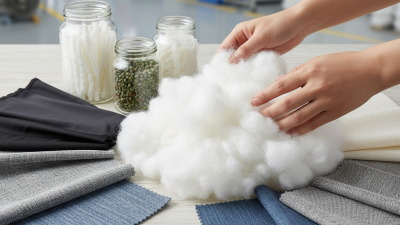
Polyester staple fiber offers stable performance across apparel, home textiles, filling, and nonwoven applications. It handles repeated washing, dries quickly, and supports consistent fabric production. In practical sourcing, buyers often value predictable denier, cut length, strength, and crimp as much as price. These details affect carding, blending, spinning, and final fabric softness.
Recycled PSF is becoming more important in international procurement. In 2022, recycled polyester represented 14.7% of total polyester output. This figure shows a meaningful shift in material demand, not a complete replacement of virgin polyester. Recycled fibers can reduce dependence on newly produced resources, especially when made from verified post-consumer materials. However, quality may vary between batches. Color, contamination, moisture, and fiber strength require careful inspection.
Reliable buyers should request test reports, recycled-content evidence, and production samples before placing large orders. A small sample may perform well, yet a full shipment can reveal uneven blending or inconsistent length. That risk deserves attention. Clear specifications and third-party testing improve confidence, while documented supply chains support responsible purchasing decisions. Recycled PSF is not automatically better in every application. Its value depends on performance, traceability, and the buyer’s actual end use.
Why Choose Polyester Staple Fiber for Global Buyers?
Polyester remains a practical choice for international sourcing. Textile Exchange’s Materials Market Report 2024 estimates that polyester represented about 59% of global fiber production in 2023. Buyers should still examine specifications carefully. Tenacity affects spinning stability, abrasion resistance, and final fabric strength. A difference of 0.5 cN/dtex may influence performance in workwear or filling applications. GSM also needs attention. A 120 GSM nonwoven and a 180 GSM sheet will behave very differently during cutting and bonding.
MOQ can reduce unit cost, but it may create unwanted inventory. Request a trial lot before confirming a large order. Certifications should match the product claim, not merely appear on a quotation. Ask for valid scope documents, recycled-content evidence, and chemical-safety test reports. Laboratories and inspection agencies can verify these details. According to the International Textile Manufacturers Federation’s 2024 industry survey, uncertain demand and supply-chain disruption remain major operational concerns. Lead time therefore deserves written confirmation. Include production, testing, packing, and port handling. A quoted 20-day lead time may exclude laboratory testing.
Tips: Compare samples under the same GSM and moisture conditions. Record tenacity results, not only supplier averages. Check carton labels and batch numbers. A low MOQ is not always economical. I have seen buyers focus on price, then absorb storage costs later. This is an easy mistake, but it remains worth reconsidering.
Buyer Evaluation Reference: Tenacity, GSM, MOQ, Certifications, and Lead Time
The chart uses a normalized procurement index for easier comparison across different units. Reference values are typical market benchmarks: 5.5 g/d tenacity, 80 g/m² GSM application target, 1 metric ton MOQ, three commonly requested certification categories, and a 21-day lead time. Actual requirements may vary by fiber specification, destination market, and order volume.