2026 Top Textile Industry Trends for Global Buyers?
The textile industry enters 2026 under pressure from changing demand, tighter sustainability expectations, and unstable sourcing conditions. Global buyers will need more than attractive prices. They will need evidence, flexibility, and clearer supplier communication.
Textile Exchange reported that global fiber production reached 124 million tonnes in 2023. It could rise to 160 million tonnes by 2030. This growth signals opportunity, but also greater resource pressure. UNEP estimates that textiles generate 2% to 8% of global greenhouse gas emissions. The figures are broad. Still, they show why fiber selection, energy use, and factory transparency will influence purchasing decisions.
Traceability is becoming practical, not theoretical. Buyers may request transaction certificates, recycled-content evidence, factory audits, and chemical-management records. Digital product passports could also make product data easier to verify across supply chains. Yet adoption remains uneven. Small suppliers may struggle with software costs and fragmented documentation.
Commercial realities matter too. McKinsey and The Business of Fashion’s State of Fashion reports continue to highlight cautious consumer spending and persistent volatility. ITMF surveys have also shown weak order conditions across parts of the textile value chain. Therefore, 2026 sourcing strategies may favor shorter production runs, regional supply options, and suppliers with reliable replenishment capacity. Not every forecast will prove correct. That is the uncomfortable part. Buyers should test assumptions through sample orders, factory conversations, and measurable performance data. This guide examines the trends shaping materials, manufacturing, compliance, and purchasing decisions for global textile buyers.
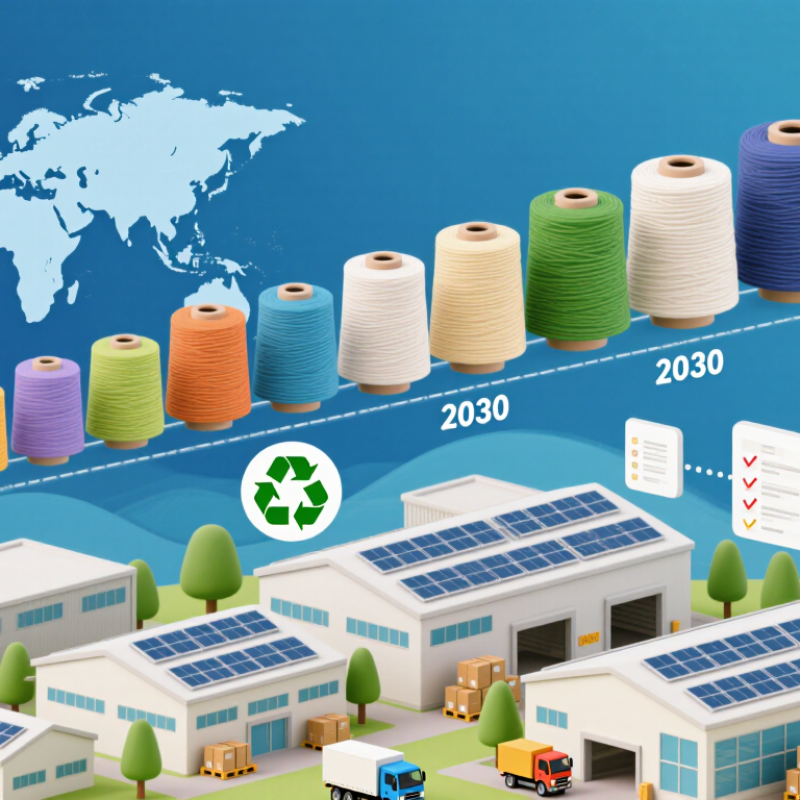
Global Market Baseline: $1.5 Trillion Textile-Apparel Trade (WTO, 2023)
2026 Top Textile Industry Trends for Global Buyers?
The WTO’s 2023 baseline places global textile-apparel trade at about
$1.5 trillion. That figure shows the sector’s scale, but it hides sharp differences between fibers, regions, and product categories. Global buyers should treat it as a market reference, not a forecast. Demand is moving toward traceable materials, shorter replenishment cycles, and measurable resource efficiency. Yet not every sustainability claim survives a supplier audit. This remains a practical weakness.
Demand is moving toward traceable materials, shorter replenishment cycles, and measurable resource efficiency.
From factory visits and sourcing reviews, reliable buying decisions begin with evidence. Ask for fiber composition records, production capacity, testing documents, and shipment histories. Check whether sample quality matches bulk production. A beautiful sample proves little. In 2026, digital product data may improve visibility across mills, dye houses, and garment facilities. However, data quality can remain uneven, especially among smaller suppliers. Compare lead times, minimum order quantities, defect rates, and resource records. Price still matters. It should not stand alone.
Tips:
Build a supplier scorecard before requesting quotations. Separate verified facts from marketing language. Request recent test reports and production photos. Confirm who controls each process. Leave room for a second inspection; schedules sometimes change. Reassess forecasts quarterly, because a trillion-dollar trade can still contain fragile supply chains.
Fiber Mix: Polyester Accounts for 57% of Global Fiber Output (Textile Exchange, 2024)
2026 Top Textile Industry Trends for Global Buyers?
Polyester accounts for 57% of global fiber output, according to Textile Exchange’s 2024 report. This share makes polyester central to sourcing decisions, from sportswear to home textiles. However, volume alone does not prove responsible performance. Buyers should check whether materials are virgin, recycled, or blended with other fibers.
In factory discussions, I have seen small fiber changes affect color, softness, drying speed, and production stability. A recycled polyester fabric may satisfy a project goal, yet still require careful testing for strength and shade consistency. Suppliers should provide fiber composition records, test reports, and traceable production details. Dates matter too. Market data can change faster than purchasing plans.
Tips: Request a fiber breakdown before approving samples. Compare at least two fabric constructions. Ask for recycled-content evidence and current laboratory tests. Check washing results after several cycles, not only after the first test. Keep a written record of every material claim. It prevents confusion later.
Polyester remains practical, but it is not automatically the best answer. I sometimes see buyers focus on price before reviewing durability or end-use needs. That approach can create waste and rework. A better decision weighs performance, verified content, expected lifespan, and realistic supply capacity. Some assumptions will still be wrong. Review them openly.
Circular Materials: Recycled Fibers Represent 8.9% of Global Production (Textile Exchange, 2024)
2026 Top Textile Industry Trends for Global Buyers
Circular materials are moving from a niche choice into mainstream sourcing decisions. Textile Exchange’s Materials Market Report 2024 states that recycled fibers represented 8.9% of global fiber production in 2023. Global output reached approximately 124 million tonnes that year. Recycled polyester remained the largest recycled fiber category. This creates opportunities for buyers seeking lower-impact materials. However, recycled does not automatically mean circular. The gap is real.
In factory sourcing, ask where the feedstock comes from and how it is processed. Pre-consumer scraps and post-consumer waste have different environmental profiles. Textile Exchange also reports that polyester accounts for more than half of global fiber production. Therefore, recycled polyester can influence large purchasing volumes quickly. Yet buyers should examine fiber quality, color consistency, shrinkage, and test results. A recycled label without traceable documentation is weak evidence. The data still has limits.
Tips: Request transaction certificates and production records before approving bulk orders. Compare recycled content with water, energy, and chemical data. Ask suppliers to explain feedstock percentages clearly. Keep a small pilot order first. UNEP’s sustainability guidance supports life-cycle thinking, but real purchasing decisions remain imperfect. Cost pressure can still push teams toward virgin materials. That tension deserves honest review, not polished claims.
Climate Priorities: Fashion Generates 2–8% of Global Emissions (UNEP)
Climate is becoming a purchasing priority for global textile buyers. UNEP estimates that fashion generates 2–8% of global greenhouse gas emissions. The range is wide because measurement methods differ. Still, the signal is clear. Fiber production, dyeing, heating, transport, and disposal all add pressure. Buyers should request product-level carbon data, not only broad sustainability claims. A recycled label alone does not reveal energy use, water stress, or shipping emissions.
Experienced sourcing teams now compare suppliers through verified energy records, material traceability, and practical reduction plans. Renewable electricity can lower factory emissions, while low-temperature dyeing may reduce energy demand. Better cutting layouts can also reduce fabric waste before production begins. These actions sound simple, but implementation is uneven. Some factories lack reliable meters or trained environmental staff. Buyers should recognize this gap and support measurable improvement instead of demanding perfect reports immediately.
Tips: Ask for the calculation boundary, reporting year, and independent verification. Compare emissions per kilogram of fabric or finished garment. Prefer suppliers with renewable-energy targets and clear progress records. Review transport routes and order quantities before approving production. Small orders may create avoidable shipping impacts. Climate claims can be incomplete, so keep questioning the data.
Smart Manufacturing: Digitalization Across 47% of Textile Firms (ITMF Survey)
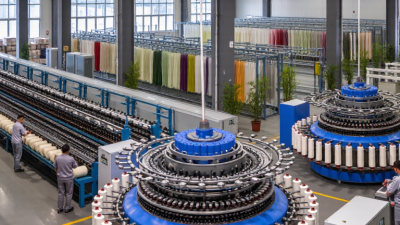
Smart manufacturing is moving from pilot rooms to production floors. An ITMF Global Textile Industry Survey reports digitalization across 47% of textile firms. That number deserves careful reading. It does not mean 47% operate fully autonomous factories. Many firms are still linking isolated machines, spreadsheets, and quality records. For global buyers, this difference changes supplier evaluation. Ask how data moves from yarn preparation to final inspection. Request evidence, not attractive dashboards.
A connected mill can flag abnormal humidity, rising energy use, or repeated loom stops. Sensors capture machine-level events, while MES tools convert them into production records. This can improve traceability and reduce avoidable rework. The International Energy Agency identifies digital monitoring as an industrial efficiency enabler. Yet textile gains depend on clean data, trained operators, and stable maintenance routines. Technology alone cannot repair poor process discipline. UNIDO’s Industrial Development Report 2024 links digital capability with industrial competitiveness, especially where skills and infrastructure remain uneven.
Buyers should examine practical proof. Compare planned and actual output for three months. Check downtime logs, corrective-action records, and worker training hours. Cybersecurity controls deserve equal attention. A supplier may own new sensors but still lack reliable integration. That is the uncomfortable part. The ITMF figure is encouraging, but it may hide uneven maturity across spinning, weaving, dyeing, and garment operations. A sourcing decision should weigh measurable control against promised innovation.
2026 Top Textile Industry Trend: Smart Manufacturing
Digitalization is becoming a major priority in the textile industry. According to an ITMF survey, 47% of textile firms reported adopting digitalization, while the remaining 53% had not yet reported adoption.
Source: ITMF survey figure cited in the 2026 textile industry trend overview. The 53% figure is the calculated complement of the reported 47%.





 No. 85 “Alexander Malinov” Blvd,
1715 Sofia, Bulgaria
No. 85 “Alexander Malinov” Blvd,
1715 Sofia, Bulgaria +359 2 953 0387
 sale@chemicalmojo.com