China remains a major manufacturing base for polyester staple products, serving apparel, home textiles, automotive interiors, and nonwoven applications. This guide introduces ten notable suppliers for buyers comparing quality, capacity, customization, and export reliability. The phrase “top” should not imply a permanent ranking. Requirements change by market, product, and production season.
Our selection approach considers hands-on purchasing factors. These include fiber length, denier, color consistency, crimp, silicon treatment, and moisture control. Recycled polyester staple options also receive attention, especially when traceability and recycled-content documentation matter. Certifications, laboratory testing, quality-control procedures, and factory communication can strongly influence long-term results.
Details matter. A supplier may offer competitive pricing but struggle with urgent delivery. Another may provide stable quality while requiring larger minimum orders. Buyers should request recent samples, technical data sheets, inspection records, and clear shipment terms before signing contracts. Production capacity alone proves little. Consistency proves more.
This overview is designed for importers, manufacturers, and sourcing teams that need practical information rather than promotional claims. Each company should be verified independently through factory audits, reference checks, and sample testing. Even experienced buyers can overlook packaging damage, batch variation, or changing raw-material costs. That is worth remembering. The best polyester staple supplier is not always the largest one. It is the partner that consistently matches your technical requirements, compliance expectations, budget, and delivery schedule.
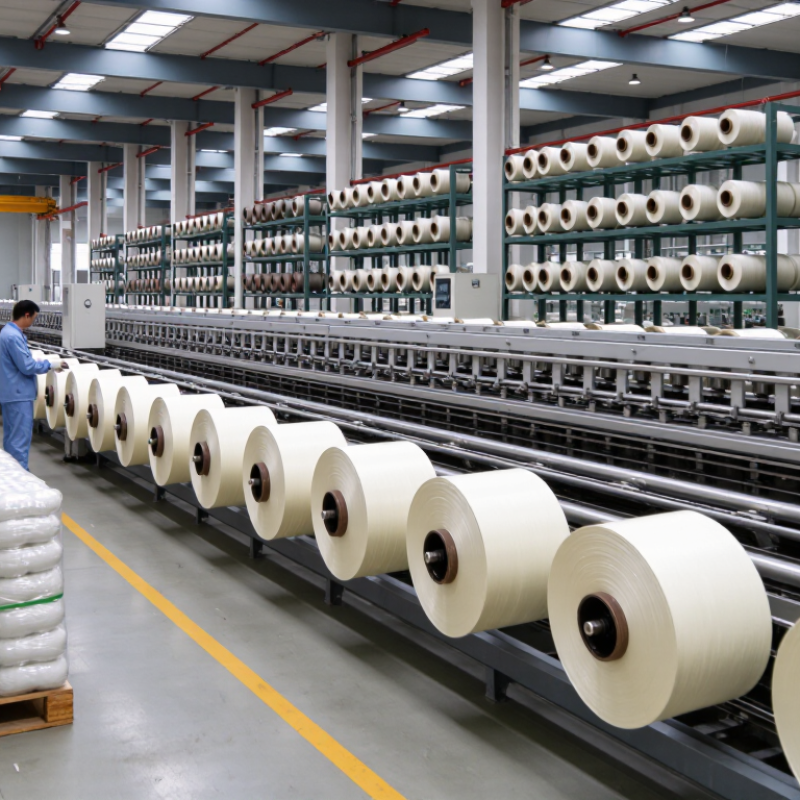
Polyester staple fiber (PSF) is a short, cut fiber made mainly from polyethylene terephthalate, or PET. It usually begins with melted polymer, which is pushed through tiny spinneret holes. The filaments are cooled, stretched, crimped, and cut into measured lengths. Short fibers matter. Spun into yarn, PSF adds softness, strength, shape retention, and easy-care performance to clothing, bedding, automotive fabrics, and nonwoven products.
China leads production because its polyester chain connects raw materials, polymer processing, spinning, finishing, and shipping within one large industrial network. This structure can reduce transport time and support consistent volume. Large factories also operate advanced lines for different deniers, lengths, colors, and hollow profiles. Engineers monitor moisture, tensile strength, crimp, and cutting accuracy during production. These details affect carding, yarn evenness, and fabric appearance.
Yet scale does not automatically mean reliable quality. Buyers should review test reports, recycled-content evidence, production records, and batch consistency before purchasing. Recycled PSF can reduce dependence on virgin materials, but feedstock variation may influence color and strength. Energy use and wastewater also deserve closer attention. Some factories are improving heat recovery and closed-loop water systems, although progress is uneven. In practice, the best supplier is not always the cheapest one; a small variation in fiber length can create visible defects across thousands of meters of fabric.
China Top 10 Polyester Staple Fiber Suppliers
Selecting among China’s leading polyester staple fiber suppliers requires more than comparing quotations. Textile Exchange’s Materials Market Report 2024 estimated global fiber production at 124 million tonnes in 2023. Polyester represented about 57% of that volume, increasing pressure on suppliers to prove consistency and resource efficiency.
Start with technical performance. Request denier tolerance, cut length, crimp, tensile strength, moisture regain, and melting-point data from recent production lots. A reliable supplier should provide laboratory records and retain samples for independent testing. Check whether recycled content claims are supported by recognized chain-of-custody certification. The Global Recycled Standard is useful, but certificates alone do not guarantee stable quality.
Capacity and delivery discipline also matter. Ask for monthly output, production lead times, emergency capacity, and port-handling experience. The International Trade Centre’s Trade Map data shows China remains a major global exporter of man-made staple fibers, yet export scale does not automatically mean dependable service. Audit the plant’s quality controls, wastewater treatment, energy records, and corrective-action process. Small details matter, such as sealed bales, readable labels, and humidity protection during storage.
Price can mislead. A cheaper offer may reflect weaker testing or inconsistent raw materials. Supplier evaluation is never perfect; even experienced buyers can overvalue polished paperwork. Use trial orders, third-party inspections, and customer references before approving long-term volumes. Supplier responsiveness during a complaint is often more revealing than a sales presentation.
China’s Top 10 Polyester Staple Fiber Suppliers form a practical sourcing group for global textile buyers. They serve spinning mills, nonwoven producers, and filling factories. A serious comparison should examine denier, cut length, crimp, luster, and silicon finish. For apparel yarn, 1.4D to 3D fibers often provide useful softness and process stability. Larger deniers may suit padding and industrial applications.
Small details matter. During supplier audits, buyers should inspect bale labels, moisture readings, and wrapping strength. Batch consistency is usually more valuable than a low first quotation.
Leading suppliers often provide virgin and recycled fiber, colored grades, hollow fiber, and low-melt options. Their technical teams should share test data for tensile strength, elongation, oil content, and thermal stability. Ask for production samples before approving a contract. Do not rely on photographs.
A dependable factory explains minimum order quantities, sample timing, loading plans, and complaint procedures in writing. Export experience also matters because humidity and long sea transport can affect packaging and fiber performance.
Buyers should verify certifications through valid documents and independent checks. However, “top ten” is not a permanent ranking; capacity, energy costs, and certification status change. Some supplier profiles look excellent online but reveal weak traceability during deeper checks. That risk deserves attention.
China Top 10 Polyester Staple Fiber Suppliers
China’s leading polyester staple fiber suppliers serve varied needs, from soft apparel yarns to durable nonwoven materials. Common product types include virgin polyester fiber, recycled polyester fiber, hollow fiber, solid fiber, and low-melt fiber. Each type offers different performance. Hollow fiber adds loft to cushions, while solid fiber supports stronger industrial fabrics. Recycled grades can reduce dependence on new raw materials, but buyers should verify traceability and test reports.
Manufacturing capability often separates reliable suppliers from ordinary factories. Modern plants use controlled melt spinning, stretching, crimping, heat setting, and precise cutting. These steps influence fiber length, fineness, strength, and dye absorption. Quality teams usually check moisture, tensile strength, color consistency, and contamination. In practice, small deviations can affect carding efficiency. That detail is easy to overlook. Some factories also provide customized denier, length, silicon treatment, and color matching for specific production lines.
Tips: Request recent test data, production samples, and application references before placing large orders. Confirm monthly capacity, packing methods, lead times, and inspection procedures. For automotive interiors, focus on flame performance and dimensional stability. For clothing, examine softness, dye uniformity, and pilling resistance. A supplier may claim broad capability, yet actual output can vary between batches. Independent testing remains a sensible safeguard.
This overview presents ten common supplier capability profiles in China’s polyester staple fiber market, rather than a verified company ranking. Company and brand names are omitted. Product specifications and capabilities vary by manufacturer; confirm them directly before sourcing.
| No. | Supplier Capability Profile | Common Product Types | Typical Manufacturing Capabilities | Main Industry Applications | Buyer Checks |
|---|---|---|---|---|---|
| 1 | Virgin polyester fiber producers | Solid, round-section PSF in common deniers and cut lengths | Melt spinning from polyester polymer, drawing, crimping, heat setting, and cutting; specifications depend on the production line. | Spun yarn, nonwovens, filling, and general textile applications | Check denier, cut length, tensile properties, crimp, finish, and lot consistency. |
| 2 | Recycled polyester fiber producers | Recycled PSF made from post-consumer or post-industrial PET feedstock | Feedstock sorting and preparation followed by melt processing and staple-fiber production; recycled content and traceability vary. | Nonwovens, padding, textiles, and products with recycled-content requirements | Request recycled-content documentation, feedstock details, testing records, and any applicable certification. |
| 3 | Hollow conjugate fiber specialists | Hollow and hollow-conjugate PSF, including crimped grades | Specialized spinnerets and cross-sections create a hollow profile; spiral or three-dimensional crimp may be added for loft and resilience. | Pillow and cushion filling, quilts, bedding, and insulation products | Compare hollow structure, crimp, siliconization, resilience, and filling performance. |
| 4 | Low-melt fiber manufacturers | Low-melting-point polyester bonding fiber, often supplied as a sheath-core bicomponent fiber | Bicomponent spinning combines a lower-melting sheath with a higher-melting core; activation temperature is grade-specific. | Thermally bonded nonwovens, automotive interiors, bedding, and insulation | Confirm sheath/core structure, recommended bonding conditions, and compatibility with the production process. |
| 5 | Fine-denier and textile-grade producers | Fine-denier PSF for soft hand and finer yarn or web structures | Controlled spinning and drawing for finer filaments; available deniers, cut lengths, and finishes differ by producer. | Blended spun yarns, apparel fabrics, soft nonwovens, and selected home textiles | Check denier uniformity, fiber length distribution, finish, and spinning performance. |
| 6 | Siliconized filling-fiber suppliers | Siliconized solid or hollow PSF, sometimes supplied in conjugate form | Applies a silicone-based finish to improve fiber slip and processing for filling applications; finish levels are grade-dependent. | Pillows, comforters, cushions, toys, and other filled goods | Assess opening, slickness, loft, odor, finish durability, and filling-line behavior. |
| 7 | Nonwoven-grade fiber producers | PSF grades designed for carding, needle punching, or thermal-bonding processes | Produces fibers with specified length, crimp, and finish for web formation; some lines offer specialty or bonding grades. | Needle-punched and thermally bonded nonwovens, filtration media, and geotextiles | Match fiber properties to the web-forming and bonding method; verify cleanliness and processability. |
| 8 | Color-fiber and dope-dyed specialists | Solution-colored PSF and selected custom-color grades | Color is introduced during polymer processing for dope-dyed grades; shade range and minimum order quantities vary. | Colored nonwovens, furnishings, automotive materials, and fiber blends | Approve shade samples and check color consistency, lightfastness requirements, and batch repeatability. |
| 9 | Functional-fiber producers | Specialty grades such as flame-retardant or other performance-modified PSF | Uses modified polymers, additives, or finishing treatments depending on the stated function; performance is product- and test-method-specific. | Technical textiles, transport interiors, furnishings, and applications with defined performance requirements | Request test reports for the exact grade and end-use standard; do not infer compliance from a general product description. |
| 10 | High-strength and technical-grade producers | Higher-tenacity PSF and grades tailored to demanding mechanical applications | Carefully controlled polymer quality, drawing, and heat setting; available tenacity and fiber dimensions depend on the grade. | Industrial fabrics, reinforcement applications, durable nonwovens, and technical textile blends | Verify tenacity, elongation, thermal behavior, and suitability for the intended process and end use. |
Common commercial specifications may include denier and cut-length options such as approximately 1.2–2.0 denier and 32–64 mm, but these are not universal limits. Always use the supplier’s current technical data sheet and confirm sample performance, quality controls, and delivery terms.
Selecting a Chinese polyester staple fiber supplier requires more than comparing a website’s product list. In practice, request samples from the same production lot stated on the quotation. Check denier, cut length, crimp, moisture, color, and tensile performance. Ask for test reports from an independent laboratory. A polished report is not enough. Compare it with your own inspection. During a factory visit, observe bale labeling, storage conditions, and cleanliness around opening equipment. Small details often reveal process discipline.
Evaluate production capacity against your monthly demand, not the supplier’s maximum claim. Ask how they handle urgent orders, shade variation, machine maintenance, and rejected batches. A dependable supplier should explain corrective actions with dates and responsible staff. Request raw-material traceability and quality inspection records. Confirm applicable certifications directly with issuing bodies. Certifications help, but they do not replace consistent shipment data. Define acceptance limits in writing, including weight tolerance, packaging, contamination, and moisture. Include a pre-shipment inspection clause.
Commercial terms deserve equal attention. Compare minimum order quantities, lead times, port options, payment stages, and after-sales response times. Test communication with technical questions before signing. Slow, vague replies may become expensive later. I once overlooked pallet stability during a trial order. The fiber met laboratory targets, yet several bales arrived damaged. That mistake changed my checklist. Begin with a controlled trial shipment, then review performance across three deliveries. Keep a backup source, even when the main supplier performs well. Reliability is demonstrated repeatedly, not promised once.