
What Is Polyester Staple Fiber and How Is It Used?
Polyester staple fiber is a manufactured textile fiber cut into short, manageable lengths. It is commonly produced from polyethylene terephthalate, known as PET. Unlike continuous filament yarn, these short fibers can be spun, blended, or bonded into different materials. The term “polyester staple” often describes fibers used in clothing, home textiles, insulation, and industrial fabrics.
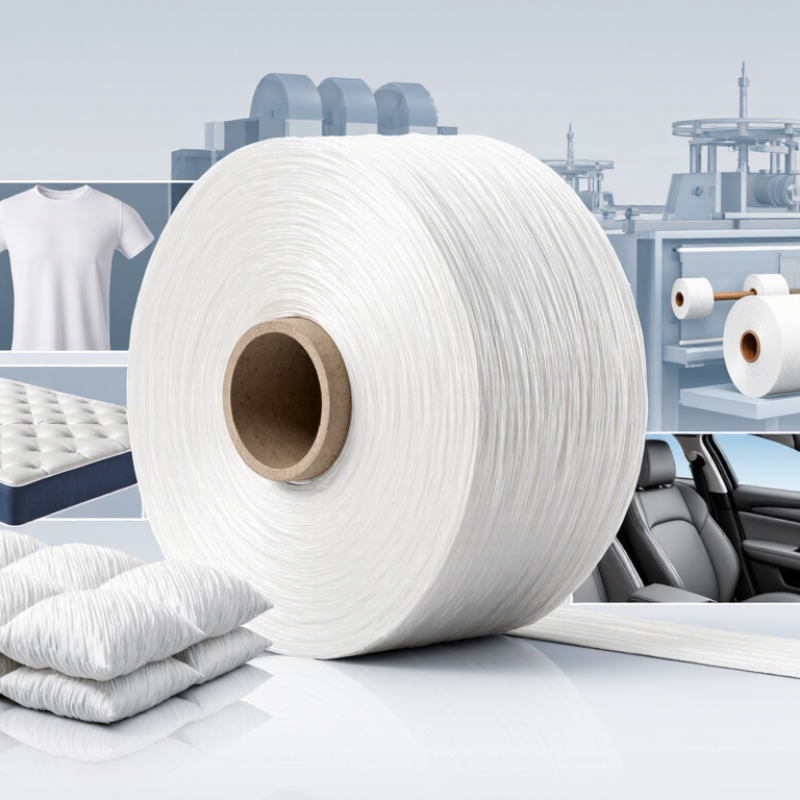
Its performance explains its wide adoption. Polyester staple fiber can provide strength, dimensional stability, quick drying, and resistance to repeated washing. In a spinning mill, workers may blend it with cotton, viscose, or wool to adjust softness, cost, and durability. The final fabric might appear in a T-shirt, mattress filling, carpet backing, or automotive interior. Nonwoven producers can also bond the fibers with heat, chemicals, or mechanical methods. The result may be soft padding or a firm filtration layer.
Still, polyester is not a perfect answer. Its fossil-based origin and limited biodegradability require careful consideration. Recycled polyester can reduce dependence on new raw materials, but collection and sorting systems remain inconsistent. Fiber shedding also deserves attention during product design and laundering. These limitations should not be ignored. A reliable assessment considers fiber quality, intended use, manufacturing conditions, and end-of-life options. Understanding these details helps buyers and designers choose polyester staple fiber with greater confidence, rather than treating it as a universal solution.
What Polyester Staple Fiber Is and Its Basic Characteristics
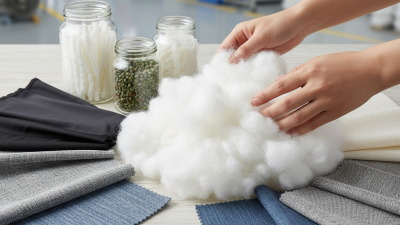
Polyester staple fiber is a man-made textile fiber cut into short lengths. It is commonly produced from polyethylene terephthalate, a thermoplastic polymer. During manufacturing, the polymer is melted and pushed through tiny spinneret holes. The resulting filaments are stretched, crimped, and cut into controlled lengths. They may feel smooth, springy, or slightly cotton-like.
Its basic characteristics include good strength, dimensional stability, and resistance to abrasion. It dries quickly because it absorbs little moisture. This helps fabrics remain lighter after washing. However, low moisture absorption can also make some garments feel less comfortable in hot, humid conditions. The fiber can be engineered in different deniers, lengths, colors, and cross-sectional shapes. Hollow forms can improve warmth without adding much weight.
Manufacturers blend polyester staple fiber with cotton, viscose, wool, or other fibers. The blend can balance durability, softness, cost, and appearance. Common uses include clothing, bedding, upholstery, nonwoven materials, and filling products. In a practical quality check, technicians examine fiber length, crimp, tensile strength, color consistency, and contamination. Small variations can affect carding and yarn evenness. That matters on the factory floor. Recycled polyester staple fiber may reduce dependence on new raw materials, but its quality depends on sorting and processing. It is not automatically identical to virgin fiber. Heating can also cause shrinkage or surface changes, so finishing conditions require careful control.
What Is Polyester Staple Fiber and How Is It Used?
| Category | Data Dimension | Typical Value or Description | Practical Significance and Common Uses |
|---|---|---|---|
| Material Identity | Fiber type | Polyester staple fiber is a man-made fiber produced in short, cut lengths rather than continuous filaments. | The short fibers can be spun into yarn or bonded into nonwoven materials. |
| Material Identity | Chemical composition | Most conventional polyester staple fiber is based on polyethylene terephthalate, commonly abbreviated as PET. | PET provides a balance of strength, dimensional stability, durability, and processability. |
| Physical Structure | Fiber length | Common textile staple lengths are approximately 32–76 mm; nonwoven grades may use different cut lengths. | Shorter fibers are often suitable for cotton-type spinning, while longer fibers can support wool-type or blended spinning systems. |
| Physical Structure | Linear density | Common apparel and home-textile grades are approximately 0.8–3.3 decitex per fiber, although specialized grades vary. | Finer fibers can provide a softer hand; coarser fibers can improve bulk, resilience, or structural support. |
| Physical Properties | Density | Approximately 1.38 g/cm³ for standard PET polyester. | The relatively high density contributes to good mass efficiency and stable fabric construction. |
| Physical Properties | Moisture regain | Approximately 0.4% under standard textile testing conditions. | The low moisture absorption supports quick drying, but untreated polyester may feel less absorbent than cellulosic fibers. |
| Physical Properties | Strength and abrasion resistance | Generally high compared with many common natural fibers; exact tenacity depends on polymer grade and processing. | Useful for durable apparel, workwear, upholstery, fillings, carpets, and industrial textiles. |
| Thermal Behavior | Glass-transition temperature | Approximately 67–81°C, depending on polymer composition and test method. | Heat-setting and finishing conditions must be controlled to maintain dimensional stability. |
| Thermal Behavior | Melting range | Approximately 250–260°C for conventional PET polyester. | The relatively high melting range supports thermal processing, while excessive heat can damage or melt the fiber. |
| Appearance and Performance | Resilience and crease recovery | Good resilience with strong resistance to wrinkling and deformation. | Common in easy-care garments, uniforms, bedding, curtains, and blended fabrics. |
| Chemical Resistance | Resistance profile | Generally resistant to many dilute acids, oxidizing agents, and common solvents; strong alkalis and prolonged high-temperature exposure can cause damage. | Supports use in household textiles and selected technical applications, subject to chemical compatibility requirements. |
| Manufacturing Options | Surface and cross-section variations | Available as solid, hollow, crimped, slick, or specialty cross-section fibers. | These designs can adjust softness, loft, warmth, luster, bulk, wicking, and bonding performance. |
| Manufacturing Options | Color and finish | Produced in bright, semi-dull, or dope-dyed forms, with optional finishes for softness, hydrophilicity, flame resistance, or bonding. | Finishes help tailor the fiber for clothing, hygiene products, insulation, filtration, and other end uses. |
| Textile Applications | Spun yarns and fabrics | Used alone or blended with cotton, viscose, wool, or other fibers. | Applications include shirts, trousers, knitwear, uniforms, sportswear, socks, bedding, and towels. |
| Nonwoven Applications | Bonded fiber products | Used in thermally bonded, resin-bonded, needle-punched, and other nonwoven structures. | Applications include insulation, mattress padding, furniture upholstery, filtration media, wipes, geotextiles, and automotive components. |
| Filling Applications | Loft and thermal insulation | Hollow and crimped fibers can create bulk and trap air. | Used as filling in pillows, quilts, sleeping bags, soft toys, jackets, and furniture cushions. |
| Sustainability | Recycled polyester staple fiber | Can be manufactured from recycled PET feedstock, including mechanically recycled post-consumer or post-industrial material. | Provides an alternative feedstock while maintaining many of the performance characteristics of conventional polyester; quality depends on input material and processing. |
| Care and Limitations | Key limitations | Low moisture absorption, possible odor retention, sensitivity to high heat, and potential surface pilling in some constructions. | Fiber selection, fabric construction, finishing, washing temperature, and heat-setting should be matched to the intended product. |
Note: Values are typical reference ranges for standard polyester staple fiber. Actual specifications vary according to polymer grade, fiber fineness, length, crimp, finish, cross-section, and manufacturing process.
Related Posts
-
Why Choose Polyester Staple Fiber for Global Buyers?
-
China Top 10 Polyester Staple Fiber Suppliers
-
Top Polyester Staple Fiber Suppliers for Global Buyers
-

Top 10 Benefits of Polyester Staple Fiber in Everyday Products?
-

2026 Top Trends in Polyester Staple Fiber Industry Insights and Innovations?
-
2026 Best Polyester Staple Fiber Products for Global Buyers?

 No. 85 “Alexander Malinov” Blvd,
1715 Sofia, Bulgaria
No. 85 “Alexander Malinov” Blvd,
1715 Sofia, Bulgaria +359 2 953 0387
 sale@chemicalmojo.com